Choosing the best home builder to protect long-term property value
Luxury residential construction today is defined not just by what is built, but by how confidently it is delivered. High-end clients do not simply want beautiful homes, they want certainty: That the design they approved is the design that gets built, that the budget they committed holds, and that the programme they were given reflects reality.
In luxury construction, where bespoke architecture, imported materials, and architect-led detailing amplify the financial consequences of every decision, the absence of that system is not an oversight. It is a risk.
Choosing the best home builder to protect long-term property value
Most homeowners approach builder selection as a procurement exercise. They gather quotes, compare figures, and look for the best price. What they are actually doing without framing it this way is making one of the most consequential investment decisions of their lives.
Property value is not created at the point of resale. It is created or destroyed during design and construction. The builder you choose determines how well the home performs thermally, how long the materials and detailing hold up, how the property is perceived in the resale market, and whether the budget you committed to reflects the final cost. None of these outcomes are incidental. They are the direct product of the decisions made before the first slab is poured.
Choosing the best home builder for your project is not a question of finding the most impressive portfolio or the lowest tender. It is a question of identifying which builder has the systems, the experience, and the discipline to protect your investment over time.
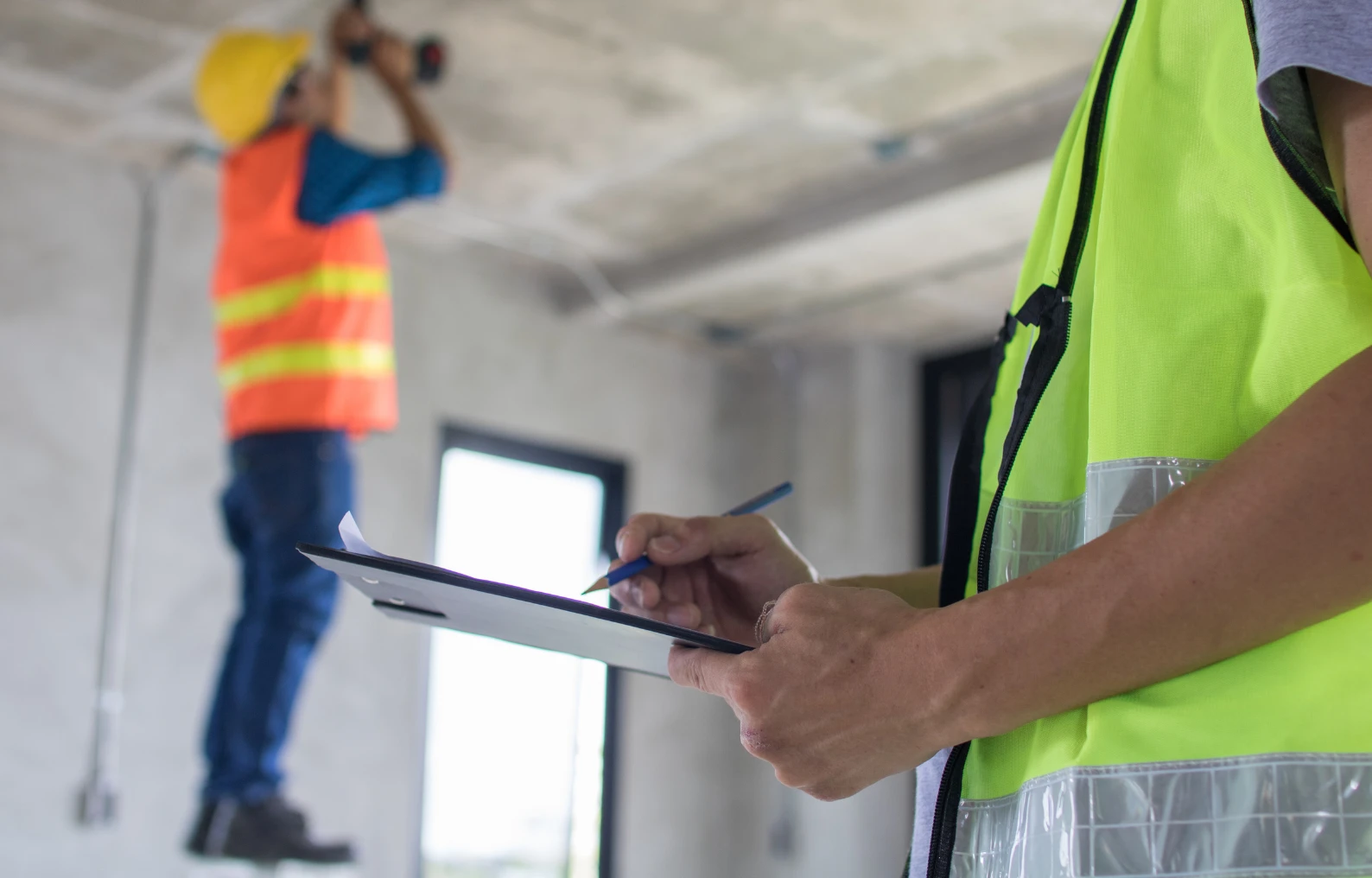
The four pillars of long-term property value
Long-term property value is not a single metric. It is the compound result of four construction-stage decisions that affect the home’s performance, durability, market position, and running cost across decades.
| Design quality | Build quality | Energy performance | Cost certainty |
|---|---|---|---|
| Site-specific orientation and spatial planning | Detailed ITPs, hold points, and QA evidence | Passive solar, high-R insulation, airtightness | Realistic allowances, transparent variation process |
| Structural coordination and clash-free documentation | Climate-appropriate materials and junction detailing | Electrification readiness and solar provisions | Cost-to-complete forecasting, not reactive accounting |
| Indoor–outdoor integration for local climate | Subcontractor accountability and defect management | High-performance glazing specified for orientation | Structured change management with pre-approval workflow |
Resale value, market perception, and lifecycle cost all trace back to decisions made during design and construction. A home that performs well thermally costs less to run, attracts a broader buyer pool, and ages more gracefully than one built to minimum compliance. A home built with detailed quality management has lower maintenance liability. A home whose budget was controlled through structured cost management was not quietly compromised during construction to protect the builder’s margin.
How underpriced builds erode long-term equity
The appeal of the lowest tender is understandable. The financial logic, however, does not hold over time. Builders who win on price typically do so by carrying assumptions that become problems after the contract is signed.
- Hidden variation exposure: unrealistically low provisional sums become post-contract variations priced at margin, at a point when the client has no competitive leverage.
- Poor detailing: waterproofing junctions, flashing details, and service penetrations that receive inadequate attention during construction generate maintenance costs and moisture damage that compound over years.
- Thermal underperformance: a home that meets minimum NatHERS compliance but was not designed for passive performance costs more to heat and cool every year and becomes progressively less competitive in a market where buyers increasingly price energy efficiency.
- Structural shortcuts: reduced supervision intensity and lower-grade subcontractor management produce work that is difficult and expensive to rectify after practical completion.
Initial construction savings that are achieved by reducing quality rarely stay saved. They re-emerge as maintenance costs, early replacement cycles, and reduced resale confidence typically at multiples of the original saving.
>>> Read more about project cost management using BIM and digital twins (Pending link)
Why design coordination protects asset value from the start
The financial consequences of poor design coordination are rarely visible at handover. They appear later in the retrofits required when a structural element conflicts with a services run, in the maintenance costs generated by material incompatibility at a junction, in the defects that trace back to a clash that was never detected because no one looked.
- Architect–engineer–builder alignment from the outset prevents the downstream cost of decisions made in isolation
- Clash detection between structural, services, and architectural elements eliminates the rework that is disproportionately expensive in high-specification interiors
- Material compatibility at junctions and interfaces particularly at waterproofing and façade transitions determines whether a home performs or deteriorates over time
Builders who integrate digital coordination tools into their workflow BIM-coordinated models that surface conflicts before construction rather than during it reduce both the rework cost and the defect risk that erodes long-term asset value. The investment in coordination is not overhead. It is insurance.
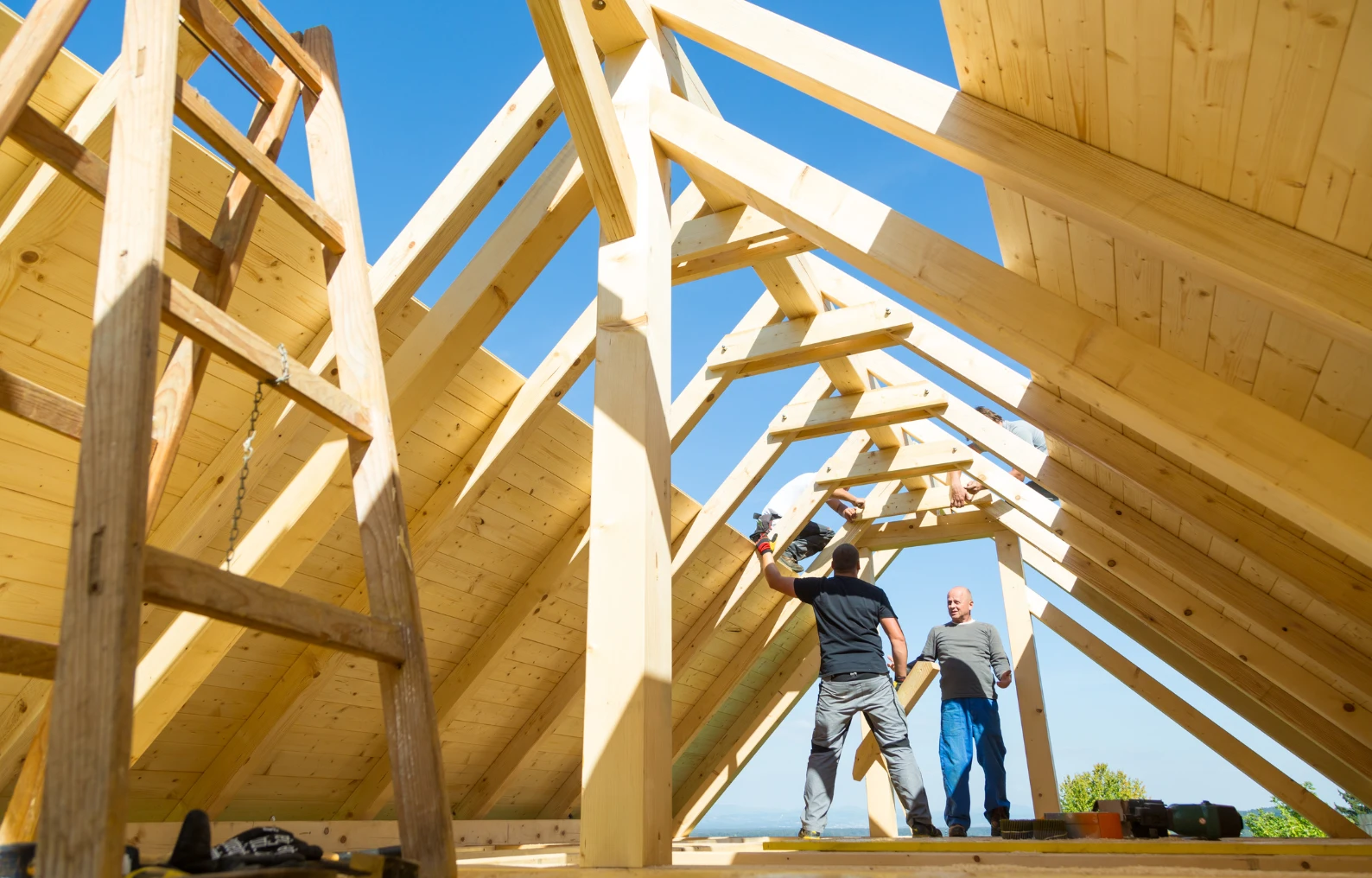
Workmanship and quality systems as a form of financial insurance
Construction quality is not a matter of pride or reputation. It is a financial variable with a direct impact on maintenance cost trajectories, resale confidence, and the likelihood of post-handover defect claims.
- Site supervision standards: a dedicated, experienced supervisor managing a reasonable project load is the single most important on-site quality control mechanism
- Inspection and Test Plans with defined hold points: waterproofing, structural framing, services rough-in, and pre-plaster inspections that are documented and evidenced not assumed
- Subcontractor accountability: pre-qualification, supervision, and a formal defect management process that closes issues before they are concealed by subsequent trades
- The connection is direct: good workmanship produces lower maintenance costs, higher resale confidence, and a building that holds its value more reliably than one that looks finished but was not carefully made.
Energy performance as a long-term value driver
Australia’s NCC 2022 requires a minimum 7-star NatHERS rating for new residential construction. Compliance with that floor, however, is not the same as performance. Future buyers and future regulators will hold homes to a progressively higher standard. Homes built to minimum compliance today will be behind the market in a decade.
- Passive solar design: orientation, glazing ratios, and eave depth designed to minimise heating and cooling load for the specific site and climate zone
- High-performance insulation: roof insulation delivers the greatest return in most Australian climates and is the single highest-priority specification decision
- Electrification readiness: heat pump hot water, heat pump HVAC, induction, and EV charging conduit provisions that allow the home to evolve without structural modification
A thermally performing home costs less to run, commands stronger buyer interest, and ages more competitively in the property market than a minimum-compliance equivalent. Energy performance is not a feature. It is a value protection strategy.
How budget discipline protects long-term equity
Financial stress during construction rarely stays contained within the construction phase. Budget overruns force compromises in specification, in finish quality, in the completeness of the scope that reduce the asset’s long-term performance and market position. Protecting the budget is not just about cash flow. It is about protecting the outcome.
- Clear inclusions and exclusions: every item in scope is explicitly documented before the contract is signed
- Realistic provisional sums: allowances are benchmarked against current market rates, not set low to produce a competitive headline figure
- Structured variation approval: every design change is priced and approved in writing before work proceeds protecting contingency from being consumed by avoidable scope creep
- Cost-to-complete forecasting: the project team maintains a live view of the final cost position throughout construction, not a historical record of invoices
Builders who operate with disciplined project control frameworks, formal change management, auditable cost reporting, and proactive forecasting protect both their client’s budget and the asset value that depends on it.
Selecting the right builder through a rigorous tender process
The tender process is where the decisions that determine long-term value are most commonly compromised. Comparing headline prices without understanding scope, allowances, and risk distribution produces contracts that cannot be delivered at the agreed price and homes that are quietly value-engineered during construction.
- Build an apples-to-apples comparison: align inclusions, provisional sums, and site works scope across all tenderers before comparing any figure
- Challenge provisional sums: ask each builder to justify their allowances against current local subcontractor rates not generic benchmarks
- Select on capability and transparency, not price: the builder who provides the most complete, honest documentation at tender is the one most likely to manage the project with the same discipline
A transparent tender process is itself a signal. Builders who invest in thorough documentation, realistic pricing, and clear scope definition at tender are demonstrating the systems they will bring to the project.
>>> Read more about how to choose custom home builders in south Australia (Pending link)
Process discipline and communication as risk reduction
Poor communication is consistently the most cited driver of client dissatisfaction in residential construction and one of the most reliable predictors of cost and programme blowout. The connection to property value is indirect but real: a construction process defined by confusion, undocumented decisions, and reactive management produces a building that reflects that confusion.
- Named supervisor with a defined project load and a structured reporting cadence
- Written decision logs and variation approvals that create an auditable record of every scope change
- Defined milestone schedule with clear predecessor logic not a programme that exists only to satisfy the contract
A predictable, well-documented construction process is not just good practice. It is a form of risk mitigation and risk mitigation directly supports long-term asset value.
Questions worth asking before you sign anything
The following questions are designed to surface the builder’s systems, not their sales narrative. A builder who answers them with specifics not generalities is demonstrating the discipline that protects long-term value.
- How are variations priced and approved, and can I see the standard variation form?
- What quality control processes are in place at waterproofing, framing, and services stages?
- How do you protect against cost escalation on long-lead or imported materials?
- Who supervises on site daily, and how many concurrent projects do they carry?
- Can you provide evidence of comparable projects of similar value, site type, and specification level?
- How do you integrate digital coordination tools into your design and construction workflow?
- Can I speak directly with a past client from a project of similar scope?
A builder who deflects, generalises, or defers on any of these questions is asking you to trust a process they cannot demonstrate. That is a risk with long-term financial consequences.
Signals that a builder poses a risk to your asset
- Quote is significantly below all comparable builders examine provisional sums and site works scope before drawing any other conclusion
- No documented quality management process, no ITPs, no defined hold points
- Vague or incomplete contract with undocumented variation and payment processes
- Programme that does not account for approval timeframes, long-lead procurement, or weather stoppages
- Poor communication responsiveness during the tender process a reliable indicator of behaviour during construction
- Inability or unwillingness to facilitate direct past-client references
Conclusion
The best home builder for your project is not the one who quotes lowest or presents most compellingly. It is the one who can demonstrate through documented systems, verifiable references, and transparent pricing that they have the discipline to protect your investment across the full life of the home.
Property value is engineered during design and construction. It is protected by design precision, build discipline, energy performance, and cost transparency. And it is supported, before construction begins, by ensuring that every design decision has been made with certainty not resolved under pressure on site. Immersive BIM-integrated visualisation tools, including those offered through DX Living, exist precisely to make that pre-construction clarity possible: decisions confirmed in a digital model before they become variations in a contract.
Choose a builder who treats your home as an asset, not a transaction. The financial difference, over time, is significant. Contact us to discover how DX Living’s immersive visualisation and digital planning platform can help you make confident decisions before any commitment is made.
FAQs
Q: What makes a home builder the best choice for long-term property value?
A: The best home builder for long-term value is one who demonstrates design coordination capability, a verifiable quality management system, transparent and realistic pricing, and a communication discipline that prevents decisions from being deferred or documented poorly. These characteristics are all verifiable before signing through direct references, documentation review, and questions about specific processes. A builder who can answer those questions with evidence, not assurances, is the one most likely to protect your investment.
Q: How does construction quality affect resale value?
A: Construction quality affects resale value through several channels: lower maintenance liability (buyers discount homes with deferred maintenance or known defect history); thermal performance (energy-efficient homes command stronger buyer interest and are more competitive as minimum standards rise); structural integrity (a home without latent defect risk attracts a broader buyer pool and is more straightforward to finance); and finish quality (detailing that holds up over time presents a more compelling proposition to informed buyers than work that has aged poorly).
Q: Why is the cheapest builder quote often the most expensive outcome?
A: Low quotes are typically constructed by understating provisional sums, making optimistic site work assumptions, and setting allowances that cannot be met at current market rates. After the contract is signed, the gap between what was priced and what delivery actually costs emerges as variations priced at the builder’s margin, without competitive pressure, at a point when the client’s ability to push back is minimal. The final cost of a low-tendered project frequently exceeds a more accurately priced alternative, with the additional cost borne entirely by the client.
Q: How does energy performance influence long-term property value?
A: Energy performance affects long-term value in three ways. First, direct operational cost: a thermally efficient home costs less to run every year, and that difference compounds over a twenty-year occupancy period as energy prices rise. Second, market competitiveness: buyers increasingly price energy performance as a feature, and homes that outperform minimum compliance standards attract stronger interest in the resale market. Third, regulatory trajectory: minimum standards will continue to rise; homes built to today’s minimum will be progressively behind the market over time, while homes built to a genuine performance standard will age more competitively.
Q: What questions should I ask a builder before signing a contract?
A: Ask how variations are priced and approved, and request the standard variation form. Ask what quality control processes are in place at each construction stage, and request a sample ITP. Ask who supervises on site daily and what their concurrent project load is. Ask for direct past-client references from comparable projects not website testimonials. Ask how digital coordination tools are integrated into the design and construction process. A builder who answers all of these with specific, documented processes is demonstrating the discipline that protects long-term asset value. One who generalises or defers is asking you to assume it exists.
Q: How does pre-construction visualisation reduce construction risk?
A: Most late-stage design changes in construction originate in the gap between how a decision reads on paper and how it is experienced in three dimensions. Spatial scale, material combinations under natural light, and the relationship between rooms and views are difficult to assess from drawings. Immersive, BIM-integrated visualisation allows clients to experience and confirm those decisions in context before any procurement commitment is made. Design changes that would generate costly variations on site priced at the builder’s margin, without competitive leverage are resolved in the digital environment, where they have no cost.
Reference
- Australian Building Codes Board (ABCB). (2023). National Construction Code (NCC) 2022 volume two: residential buildings.
- NatHERS 7-star energy efficiency rating requirements, effective May 2024.
- Standards Australia. (2011). AS 2870-2011: Residential slabs and footings. SAI Global.
- Housing Industry Association (HIA). (2024). HIA contracts and documentation guide for residential construction.
- Master Builders Australia. (2023). Building quality: consumer and industry guidance.
- Australian Institute of Architects (AIA). (2023). The value of architecture: design quality in residential projects.
- Royal Institution of Chartered Surveyors (RICS). (2022). Lifecycle costing for construction projects guidance note.
- Property Council of Australia. (2022). Sustainable buildings and long-term asset value.
>>> Learn more about the pre-contract checklist
Related Articles
The pre-contract checklist: 18 things to confirm before you sign with a builder
Before you sign with a builder checklist: The 18 things to confirm on the contract, the specification and the plan, and what each one costs if you miss it.
Read MorePlanning a home cinema in Australia: What drives the cost and how to review it in VR first
Home cinema cost Australia: Indicative 2026 budgets across four tiers, the seven items that actually drive the number, and how to review the room in VR.
Read MoreLiving room trends in Australia for 2026 and 2027: How to test them in 3D before you commit
Living room trends Australia: The 10 directions shaping 2026 and 2027, which ones survive a decade, and how to test each in 3D before you commit.
Read More