Virtual reality interior design: Reviewing materials before construction
Material decisions are among the most consequential choices in a residential project, yet they are usually made from the least reliable evidence: A palm-sized sample held under showroom light, a swatch on a screen, or a finishes schedule that lists products by code rather than by feel. A stone that reads calm and pale on a 90 mm tile can dominate a room across a ten-metre floor; a timber that looks warm in a supplier’s downlights can turn grey under a south-facing window. The gap between the sample and the built room is where expensive, late changes are born.
Virtual reality interior design closes part of that gap: It places materials, finishes and lighting into a full-scale, walkable version of the actual space, so decisions are judged in context rather than in isolation. This article explains why static samples fall short, how immersive review changes the way materials are assessed, what VR can and cannot confirm, and how to run a disciplined VR material review before construction.
Learn more: architectural visualisation Melbourne for project decisions
Why static samples lack spatial context
A physical sample answers one narrow question, what does this product look like up close, while hiding most of the questions that actually determine whether a material works. The missing context compounds:
- Scale: A pattern, vein or plank width that reads well at sample size can feel busy or repetitive across a full floor or wall.
- Adjacency: Materials are never experienced alone; the real question is how a benchtop reads against the joinery, floor and splashback beside it.
- Light: Colour temperature, direction and intensity shift a surface’s colour and gloss throughout the day, and no showroom reproduces the room’s own aperture and orientation.
- Distance and viewing angle: Reflectivity, texture and grout lines behave differently at 300 mm than across a room at standing height.
- Transitions: How one floor material meets another at a doorway, or how a wall finish turns a corner, is invisible in a flat sample.
Key insight: Approving a material from a sample alone is approving roughly a tenth of the decision. The rest, scale, adjacency, light and transition, only becomes legible at full size, in the room, which is exactly what a sample cannot provide and what a drawing cannot convey.
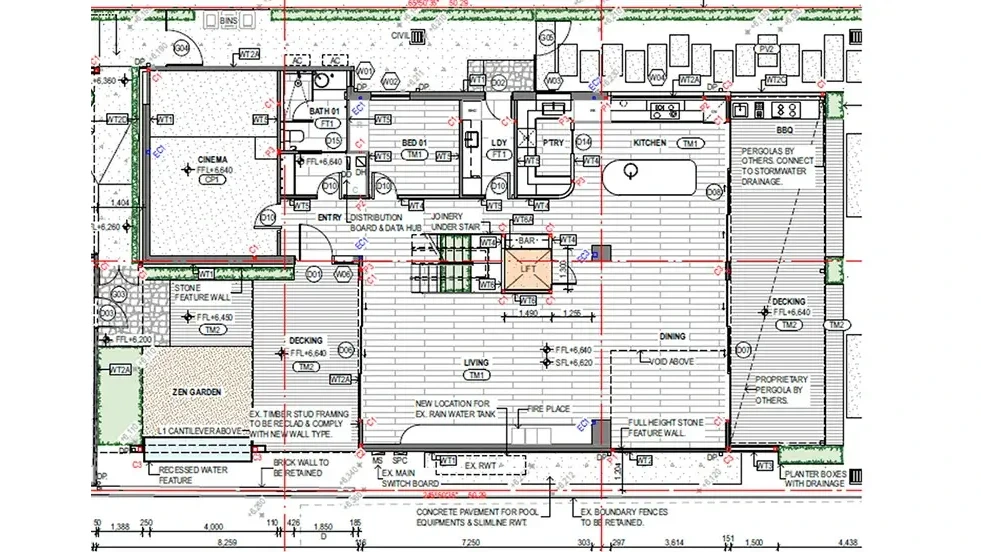
How virtual reality interior design changes material review
Virtual reality interior design reconstructs the proposed space at true scale and lets the reviewer stand inside it, so materials are assessed the way they will actually be lived with. Instead of imagining how a schedule of finishes resolves into a room, the client and project team experience the composition: They walk the floor, look along sightlines, turn corners and read one surface against the next. The value is not the novelty of the headset; it is that a decision normally made from fragments is made instead from a coherent whole, while the design is still free to change.
Used well, an immersive review lets a team read material hierarchy (which surfaces lead and which recede), the balance of warm and cool finishes, the weight and mood of a palette, and the way daylight and artificial light land on each surface. Concerns that would otherwise surface on site, a floor that feels too dark, a stone that overwhelms a compact ensuite, a joinery colour that fights the flooring, surface early, when resolving them costs a revised selection rather than a variation priced at the builder’s margin.
Evaluating material continuity between rooms
Individual rooms can each be “correct” while the home as a whole feels disjointed. Continuity is a whole-of-project property, and it is one of the clearest things an immersive walkthrough reveals.
It shows how a palette holds across circulation
Moving through an entry, hallway, living area and kitchen in sequence tests whether floor materials, wall finishes and joinery tones carry a consistent language or break awkwardly at each threshold. A palette that photographs well room-by-room can still read as a series of unrelated decisions once you walk the path between them.
It exposes transitions and junctions early
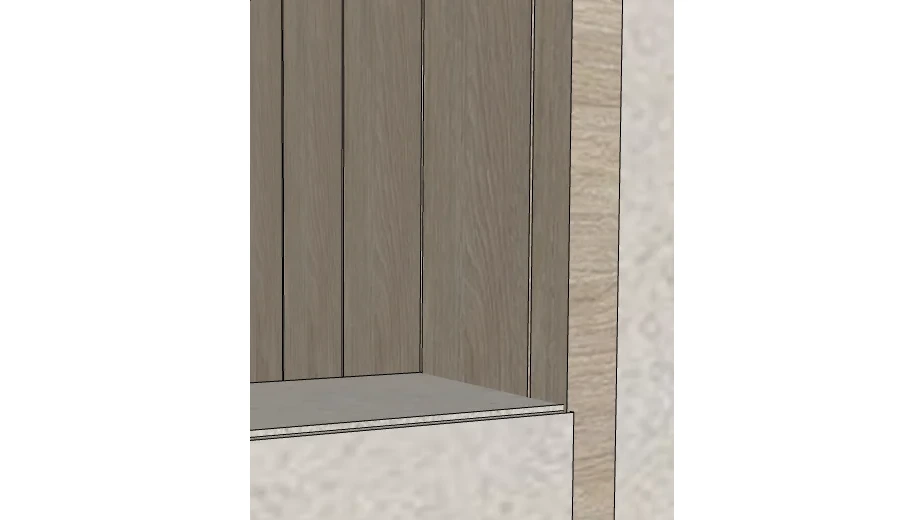
Where tile meets timber, where a stone benchtop returns to a wall, where a floor finish changes at a doorway, these junctions are where material choices either resolve cleanly or create visual noise. Reviewed in VR, a clumsy transition is a five-minute selection change; discovered on site, it is a rework.
Lighting and materials in an immersive walkthrough
Light is not a backdrop to material selection; it is half the decision. The same finish can shift markedly with colour temperature, direction and the mix of daylight and artificial sources, so a credible material review has to include the lighting the room will actually have.
An immersive walkthrough lets a team read how surfaces behave under a project’s real conditions: How a matte floor absorbs light while a polished stone throws it, how warmer artificial light (around 2700–3000 K) flatters timber while cooler light (4000 K and above) can render the same board flat or grey, and how daylight from a specific orientation grazes a textured wall and reveals, or hides, its relief. For daylight-led homes in particular, seeing materials under a realistic natural-light model matters more than any showroom impression. DX Living builds these reviews from BIM-integrated models so the lighting and materials shown reflect current project information rather than a generic scene, see the DX Studio immersive review module and the DX Living project collection.
Key insight: A material is never approved in isolation from its light. Reviewing finishes under the room’s own orientation, apertures and lighting temperature is what turns a pleasant image into a decision you can trust.
What virtual reality interior design can and cannot confirm
VR earns trust by being clear about its limits. Treating an immersive review as the whole answer is as risky as approving a room from a swatch.
| VR interior review can help confirm | VR interior review cannot replace |
|---|---|
| Scale, proportion and how a material reads across a full surface | Physical samples for true colour, texture and tactile quality |
| Adjacency and hierarchy between finishes in one space | Technical performance: Slip rating, R-value, durability, fire properties |
| Material continuity and transitions between rooms | Supplier confirmation of availability, batch variation and lead time |
| How finishes respond to the project’s daylight and lighting mood | Calibrated colour accuracy across every headset and display |
| Surfacing concerns before procurement and construction | Final selections, which still need sign-off against samples and specs |
Key insight: Immersive review is a decision-support tool, not a decision guarantee. Its job is to make the right questions visible early; physical samples, supplier data and technical specifications still close each selection.
A practical VR material review checklist
An immersive session adds value only when it is tied to a clear review process. Before and during a VR material review, confirm:
- Current source model: The walkthrough is built from up-to-date drawings or a current BIM model, not superseded documentation.
- Confirmed vs indicative finishes: Every material shown is labelled as either a real, available product or an indicative placeholder, never presented as confirmed when it is not.
- Realistic lighting: The scene uses the room’s true orientation, apertures and intended lighting temperature, not a flattering generic setup.
- A defined decision list: The session targets specific choices (floor, joinery, stone, splashback, wall finish) rather than a general look-around.
- Sample pairing: Each shortlisted finish has a physical sample on hand to check colour, texture and tactility against the immersive view.
- Recorded outcomes: Decisions, concerns and follow-ups are logged and linked to procurement and programme milestones, so a VR sign-off actually flows into the build.
Solution: Pair the immersive review with a supplier-linked material library so shortlisted products carry real specifications and availability, not just an appearance, see how DX Interiors connects finishes to supplier data, and how VR and BIM work together in why luxury home builders Melbourne use VR and BIM.
How DX Living supports material decisions
DX Living combines BIM-integrated visualisation, immersive VR walkthroughs and supplier-linked material review to help project teams move from an abstract finishes schedule to clearer pre-construction decisions. The work spans photorealistic interior and exterior views, immersive review of materials, lighting and spatial flow, and supplier-linked selection through DX Interiors, with the DX Prestige module supporting high-end residential projects. DX Living is a visualisation and coordination partner, not a building contractor or a substitute for physical sampling: The aim is to help clients, architects and builders review materials with more context and approve them with more confidence, before commitments are locked in.
Conclusion
Materials make or break how a finished home feels, yet they are too often approved from evidence that hides most of what matters. Virtual reality interior design gives clients and project teams a full-scale, walkable context in which to judge scale, adjacency, continuity and light, the qualities a sample or a drawing cannot convey. Reviewed early and honestly, and always paired with physical samples, supplier data and technical checks, an immersive material review resolves questions while they are still free to change, rather than expensive to fix on site.
Ready to review your project’s materials in full context before you build? Contact DX Living to explore how immersive, BIM-integrated material review supports your project.
FAQs
Q: What is virtual reality interior design?
A: Virtual reality interior design is the use of immersive, full-scale digital walkthroughs to review a proposed interior, its materials, finishes, lighting and spatial flow, before construction, so decisions are made from lived spatial context rather than from samples or drawings alone.
Q: How does virtual reality interior design help with material selection?
A: It places finishes into the actual room at true scale, so a team can judge how a material reads across a full surface, how it sits against adjacent finishes, how it carries between rooms, and how it responds to the space’s own daylight and lighting, context that a physical sample cannot show.
Q: Can VR replace physical material samples?
A: No. VR is best for judging scale, adjacency, continuity and light, but it cannot replace physical samples for true colour, texture and tactile quality, or confirm technical performance and supplier availability. The two are used together.
Q: Does virtual reality interior design guarantee the final result?
A: No. It reduces uncertainty by surfacing concerns early, but final selections still need sign-off against physical samples, specifications and supplier confirmation. Colour accuracy also varies between headsets and displays.
Q: When in a project should a VR material review happen?
A: During design development and material selection, before procurement and construction commitments are made, so that any changes to finishes, lighting or transitions are still inexpensive to resolve.
Q: Is virtual reality interior design only for luxury homes?
A: It adds the most value on projects with bespoke materials, engaged clients or complex spatial and lighting relationships, which are common in luxury and custom homes, but the same review discipline can benefit any project where material decisions carry cost or risk.
References
- YourHome (Australian Government). Lighting, designing for daylight and energy-efficient artificial lighting.
- Australian Building Codes Board. National Construction Code (NCC).
- NatHERS, Nationwide House Energy Rating Scheme (daylight and thermal performance context).
- ISO 19650-1:2018. Information management using BIM. Part 1: Concepts and principles.
- NATSPEC. National BIM Guide.
- Standards Australia. AS 4586, Slip resistance classification of new pedestrian surface materials.
Related Articles
VR walkthrough services in Australia: What builders and developers use them for
VR walkthrough services Australia: What a session actually settles, what it costs, what the model needs, and where VR beats a render or a 360 tour.
Read MoreSmart home and security for luxury homes
Smart home and security design for luxury homes: The cabling, network and control decisions that must be made before walls close, and how to avoid a system nobody uses.
Read MoreProject 251 case study on 4D and VR visualisation
How a BIM-integrated model, 4D sequencing and a VR flythrough were used to resolve design and buildability decisions on an in-progress luxury home in Edithvale, Victoria.
Read More