Outdoor fire pit tables in Australia: a guide
A flame is easy. A flame that is safe, serviceable and still looks like furniture in five years is engineering. Most of what decides whether an outdoor fire pit table Australia households actually enjoy is resolved before the burner is bought: Where it can sit, what has to be open around it, how the housing breathes, how water gets out of it, and which gas it runs on.
The trap is that a fire table is sold as an object and installed as a gas appliance. It arrives looking like a piece of outdoor furniture, and it carries a compliance plate, a minimum clearance schedule, a ventilation requirement and a gasfitter’s sign-off. This article covers what the specification sheets actually demand, using the outdoor fire package at Project 251 as the worked example, and where those demands collide with the landscape design.
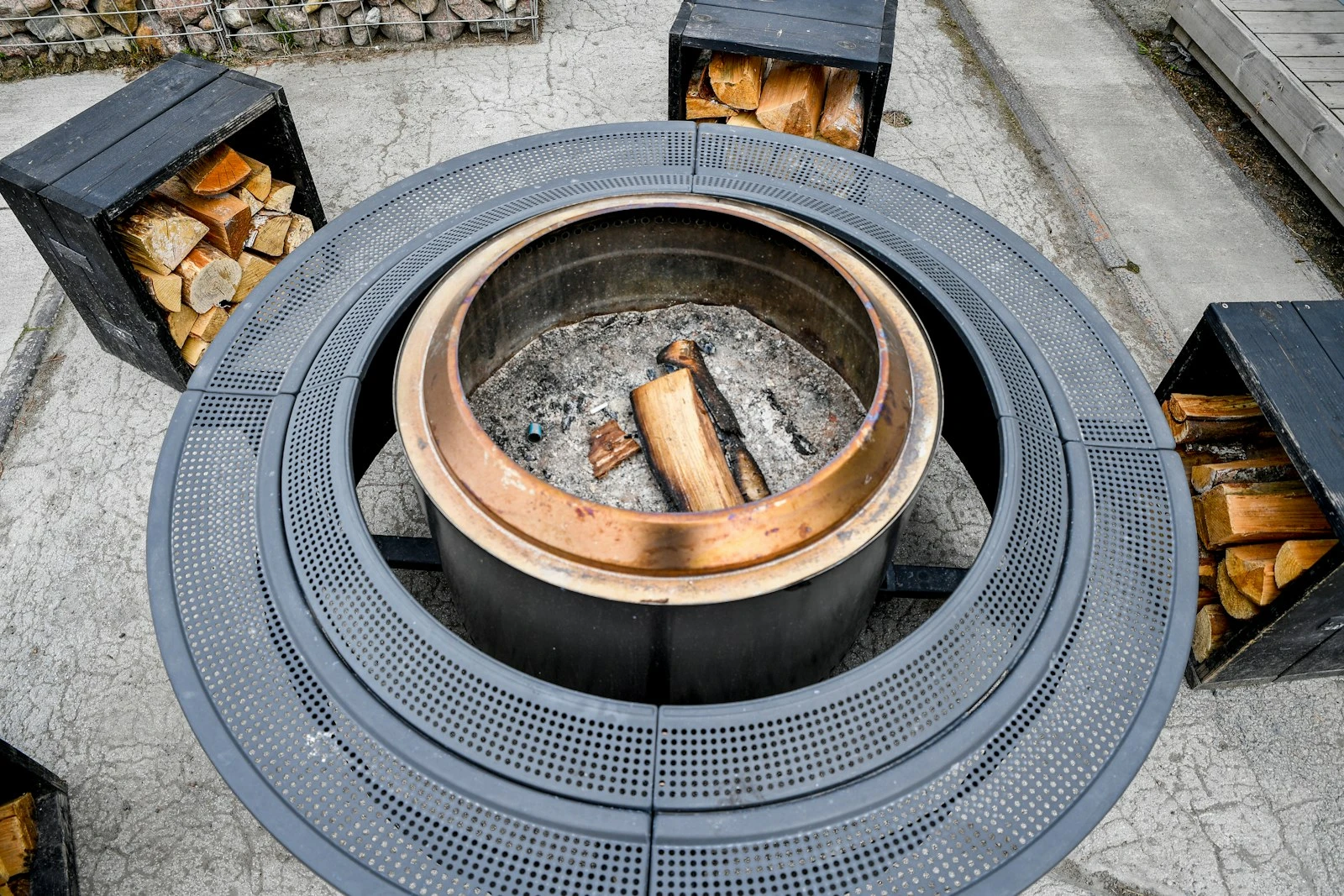
The compliance plate is the design brief
Every outdoor gas fire sold in Australia carries a compliance plate, and that plate is more useful than the brochure. On the unit type specified at Project 251 it states gas input in megajoules per hour, the injector size and inlet pressure for each gas type, the Australian Standards the appliance was tested to, and four numbers that decide the whole layout: Minimum clearance to combustibles at the front, the rear, each side and above.
Two things on that plate are routinely missed:
- Decorative appliance, not certified as a space heater: A flueless outdoor fire is a visual and social object. It is not the heating strategy for an alfresco, and specifying it as one leads to disappointment in July.
- Outdoor use only: Flueless means the combustion products go into the air around the fire. That is acceptable outdoors, with ventilation, and not acceptable in an enclosed room.
At Project 251 the specification is a flueless outdoor gas burner in a purpose-built surround. The source records name more than one candidate unit, so the final burner remains [TBC] until the gasfitter’s commissioning documents confirm it. Every material described here is indicative of the design direction and is not a final selection.
Key insight: A fire table’s compliance plate sets the minimum footprint of clear, non-combustible space around it. Design the space from the plate outwards, not the fire into a space you already drew.
The clearances that decide where the fire can go
Clearance to combustibles
The units under consideration at Project 251 call for clearances in the order of 500 mm to the front, rear and sides, and a substantially larger dimension above. One manufacturer’s manual for a wall-format flueless patio fire requires a 150 mm non-combustible zone directly above the appliance, 50 mm to combustible material at the sides and back, and a minimum of 1830 mm to any ceiling, noting that LPG combustion can discolour surfaces above the flame over time. Wall linings behind the appliance are specified as non-combustible sheeting rather than timber or plasterboard.
Translate that into a landscape drawing and it removes several places a fire table might otherwise sit: Under a low pergola beam, against a timber screen, tucked into a built-in bench with a timber seat, or beneath a fabric umbrella.
Ventilation and the open sides requirement
Flueless outdoor appliances are approved on the basis that the space around them is genuinely open. The manual for the specified range requires the outdoor area to have at least two open sides. An alfresco that started as a covered terrace and gained retractable screens, blinds or a louvre roof during design can quietly stop meeting that test.
What this means for your decision
Fix the fire’s position, and the clear zone around it, before the pergola, screens and built-in seating are documented. It is a geometry decision, and geometry is free to move in a model and expensive to move in steel.
>>> Learn more about the elements competing for that space inoutdoor living and alfresco design
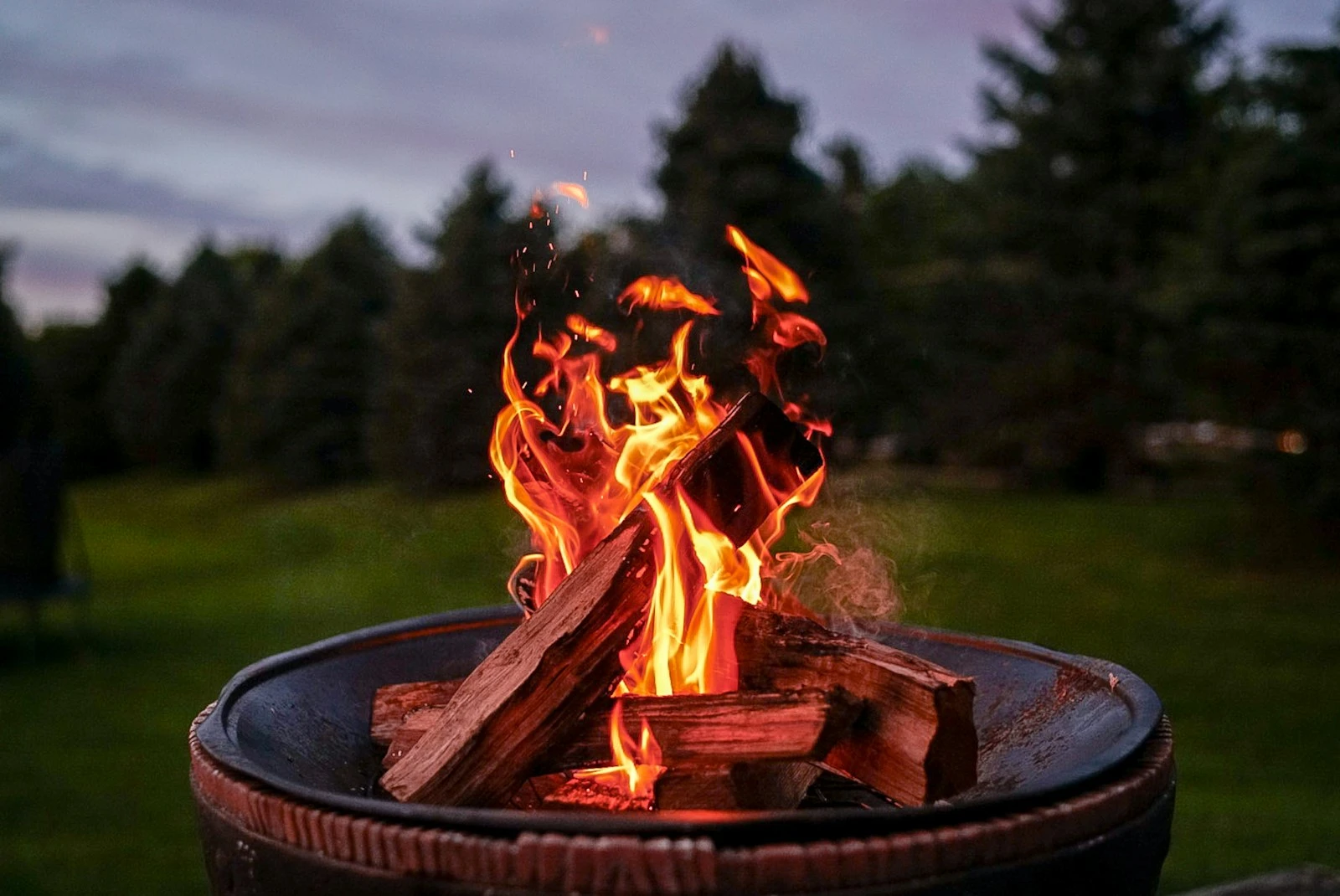
What is happening underneath the bowl
The visible part of a fire table is a bowl and a stone top. The part that determines whether it survives is the cavity beneath it.
- The housing has to breathe, by a calculated amount: For the round burner format specified at Project 251, the manufacturer sets a minimum free ventilation area of 17,000 mm squared through the stand, derived as roughly 2.5 per cent of the half-diameter face of the housing. In practice that is a pair of openings at around 170 by 100 mm, or a longer slot at 340 by 50 mm, arranged for cross-flow rather than clustered on one face.
- Drainage is mandatory, not optional: The cavity will take rain, and the requirement is that it can dry. The detail at Project 251 sets a 500 mm diameter void lined with a vapour barrier, a 600 mm diameter return at 50 mm high, and a 534 mm diameter burner edge, with drainage taken out of the base rather than left to evaporate.
- Masonry needs a vapour barrier: The manufacturer’s note is direct: A masonry structure requires a vapour barrier to prevent rising damp, and the burner housing must sit on a sealed surface that does not retain moisture. A stone or concrete plinth built straight off a slab without that layer will wick water up into the burner enclosure for the life of the fire.
- Keep the gas connection short and accessible: The specified range limits the flexible hose to a maximum of 900 mm, and an in-line test point is required so supply pressure can be verified. Both of those need a service hatch that survives the final stone cladding.
Key insight: The three things that kill an outdoor fire are moisture in the cavity, blocked ventilation, and a gas connection nobody can reach. All three are detailing decisions taken before the surround is built.
LPG or natural gas is a decision, not a preference
The burner arrives configured for one gas and converted to the other. The range specified at Project 251 ships set for LPG with a natural gas conversion kit in the box, to be fitted by a licensed gasfitter, with different injector sizes and different inlet and test point pressures for each gas.
The consequence runs back into the services design:
- Natural gas means a run, a meter capacity check and a point in the landscape: A fire table drawing in the order of 60 MJ/h is not a trivial load to add at the end of a project.
- LPG means a bottle, and somewhere to put it: Ventilated, accessible, screened, and within hose reach of the appliance.
- Conversion is a gasfitter’s job with paperwork: It is not a field adjustment, and doing it informally puts the appliance outside its approval.
What this means for your decision
Choose the gas type at the same time you choose the burner, and put the gas point or the bottle enclosure on the landscape plan. Deciding it after paving is a variation that involves lifting the paving.
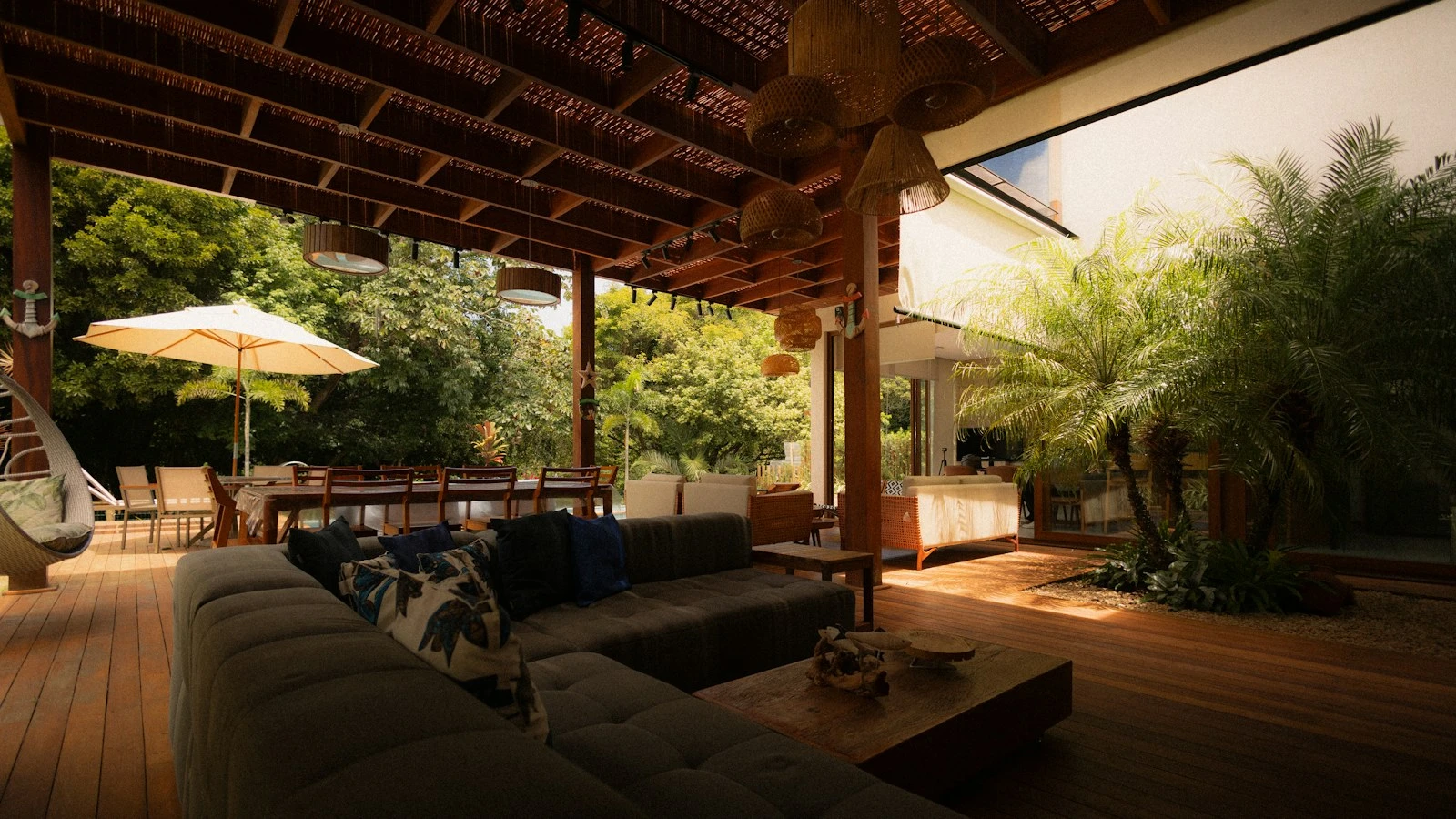
Making it look like furniture
The engineering above is invisible in the finished garden, which is the point. At Project 251 the fire sits in a sculpted surround with a stone top and a stainless structure, detailed so the burner bowl, the ventilation openings and the service access read as part of the object rather than as concessions to a manual.
One coordination move is worth copying. The fire pit edge is set out on the same datum as the pool waterline and the spa waterline, so three separate water and fire elements in one garden share a single horizontal reference. That is a decision that costs nothing at model stage and is impossible to recover once the pool shell is poured.
>>> Learn more about the surrounding hard landscape inlandscape design in Melbourne
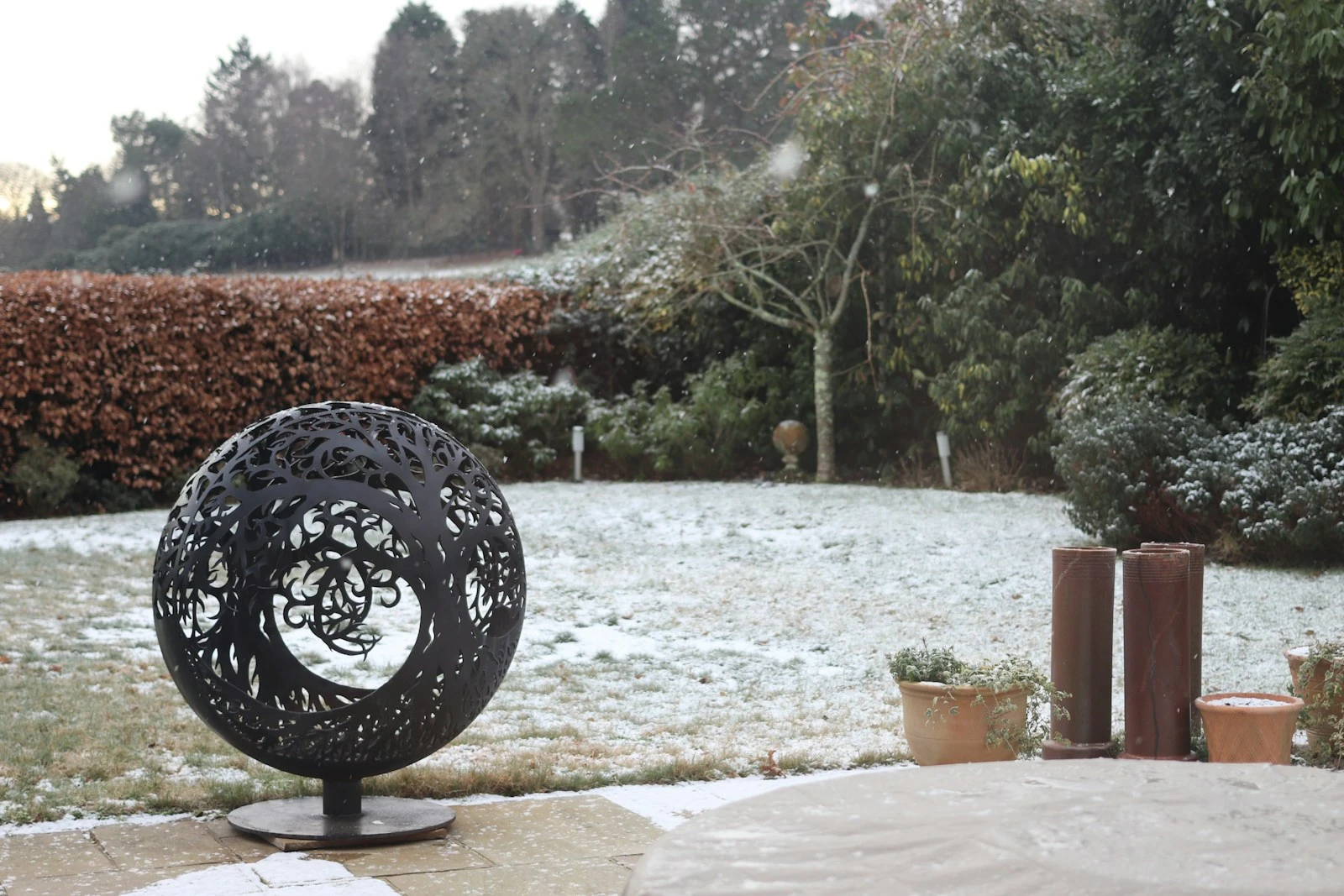
What to lock, and when
| Decision | Locked at | Cost of changing later |
|---|---|---|
| Burner model and gas type | Before services documentation | Re-run gas, re-size the point, re-certify |
| Fire position and clearance zone | Landscape and pergola documentation | Move the pergola, the screens or the seating |
| Housing ventilation openings | Surround fabrication | Cut into finished stone |
| Vapour barrier and drainage in the base | Base construction | Demolish the plinth |
| Service access to the gas connection | Surround fabrication | Remove cladding to reach the hose |
| Top material and colour | Before fabrication | Moderate, this is the flexible one |
How DX Living supports outdoor fire coordination
DX Living is a project control specialist firm combining project planning with visualisation, rather than a building contractor, and gas work is always the licensed gasfitter’s responsibility. What coordination adds is earlier: The fire, its clearance envelope, the pergola structure, the screens, the seating and the paving levels are modelled together, so a 500 mm clearance that a timber bench would have breached is visible while the bench is still a line in a drawing.
The commercial argument is the usual one. A fire moved 400 mm in a model costs nothing. The same move after the paving is laid is a variation priced at the builder’s margin.
Renders and coordination models do not replace documentation, engineering certification or building approval. Project 251, Edithvale VIC. Visualisation by DX Living. Materials shown are indicative of the design direction and are not final selections.
Conclusion
An outdoor fire pit table is a gas appliance wearing furniture. Its compliance plate sets a clear zone that the pergola, screens and seating must respect. Its housing needs a calculated ventilation area and a drained, vapour-barriered base or it will fail quietly from below. Its gas type decides a services run or a bottle enclosure, and converting between the two is a licensed job. None of that is difficult, and all of it is expensive to retrofit. Resolve the burner, the gas, the clearances and the base build-up while the garden is still a model, and the only decision left at the end is the colour of the stone.
Ready to place your fire, pergola and paving in one coordinated model? Contact DX Living.
FAQs
Q: Is an outdoor fire pit table in Australia safe to use under a pergola?
A: It depends on the appliance and the pergola. An outdoor fire pit table Australia suppliers sell is usually a flueless gas appliance, approved only for outdoor areas with at least two open sides, and with a stated minimum clearance above the flame that can be well over a metre. Check the specific appliance’s compliance plate and installation manual, and have a licensed gasfitter confirm the position before the pergola is built.
Q: What clearances does an outdoor gas fire need?
A: The compliance plate is the authority, and the figures vary by model. Typical requirements for the units considered at Project 251 are in the order of 500 mm to the front, rear and sides, a non-combustible zone directly above the appliance, and a much larger clearance to any ceiling or overhead structure. Never work from a general figure when the appliance carries its own.
Q: Does a fire pit enclosure need ventilation?
A: Yes, and by a calculated amount. The round burner format specified at Project 251 requires a minimum free ventilation area of about 17,000 mm squared through the stand, arranged for cross-flow. Openings clustered on one face do not achieve the same result as openings on opposing faces.
Q: Why does a fire pit base need a vapour barrier?
A: Because a masonry plinth will wick ground moisture upwards into the burner enclosure. The manufacturer’s requirement is a vapour barrier plus a sealed surface that does not retain moisture, together with drainage out of the cavity. Without it the burner sits in damp for years.
Q: Can I convert a fire pit from LPG to natural gas?
A: Only through a licensed gasfitter, using the manufacturer’s conversion kit. The injector size and the inlet and test point pressures differ between the two gases. An informal adjustment puts the appliance outside its approval and its warranty.
Q: Is a fire table enough to heat an alfresco?
A: Generally no. Flueless outdoor fires are commonly marked as decorative appliances rather than certified space heaters. Treat the fire as a social and visual element, and plan actual heating separately.
Q: When should the fire be decided in the design programme?
A: Before the services and landscape documentation is finalised. The burner choice sets the gas type, the gas type sets a supply run or a bottle enclosure, and the clearance envelope sets where the pergola, screens and built-in seating can go.
References
- Standards Australia. AS/NZS 5601.1 Gas installations: General installations.
- Australian Building Codes Board. National Construction Code 2022, Volume Two.
- Energy Safe Victoria. Gas safety: Appliances and installations.
- Product Safety Australia. Outdoor heating and fire pits.
- Country Fire Authority. Outdoor fires and fire restrictions.
- Australian Government. Your Home: Outdoor living.
Related Articles
Contemporary houses: design, costs and planning
Contemporary houses sit at the intersection of current architectural thinking, evolving lifestyles, and stricter performance expectations. Rather than chasing a single visual style, they prioritise how space works, circulation, light,…
Read MoreHow to brief interior design for developers
Interior design for property developers: how to brief finish schemes that sell, hold cost through tender and stay on programme, and how to test them in 3D first.
Read MoreHome cinema cost Australia: 2026 budget tiers
A home cinema quote can arrive at A$25,000 or A$250,000 for what sounds like the same brief, and both can be honest. The spread is not mostly in the equipment.…
Read More